
Indian Trail City Directory Collections
No authoritative, complete Indian Trail historical directory or Indian Trail-specific digitized run was located. The practical historical shelf is the nearby Monroe and Union County material, together with local-history and archive collections. That distinction matters. A Monroe entry may point toward an Indian Trail family, road, business, or county connection, but it is not a modern town-wide residents list.
| Collection | Years | Where Held | Access |
|---|---|---|---|
| DigitalNC Monroe and Union historical volumes | 1922-23, 1942-43, 1951-52, 1955-56, 1958-59, 1960-61, 1962-63 | DigitalNC | Free online, page by page |
| Dickerson Genealogy & Local History Room materials | Coverage varies by item | Union County Public Library Main Library, Monroe | In-library research and librarian help |
| Union County miscellaneous records | 1844-1967 | North Carolina State Archives | Catalog, reading room, or specific copy request |
| Union County deed microfilm | 1843-1883 | FamilySearch catalog | Account or affiliate-library access may be required |
Use the dates as collection coverage, not as a promise that every Indian Trail household appears. Missing years, rural labels, business-only listings, and later address changes can all interrupt a historical trail.
Indian Trail research is strongest when the town name, the Union County setting, and the printed place name all agree. Indian Trail directories have to be read with those changing boundaries in mind.
Indian Trail sits within Union County records geography. An Indian Trail mailing label can differ from an Indian Trail corporate-limit result, so each historical place reference deserves a check.
Indian Trail records, Indian Trail roads, and Indian Trail postal labels should be logged separately. That keeps an Indian Trail match from crossing a boundary without evidence.
Indian Trail Volumes Near Monroe
The DigitalNC 1922-23 Monroe directory record is the nearest identified digitized directory collection. DigitalNC also holds the 1942-43, 1951-52, 1955-56, 1958-59, 1960-61, and 1962-63 Monroe/Union volumes. Search by surname first, then read the surrounding entries and the volume's own abbreviation key. A road or rural-delivery reference can be more useful than a modern street-number search.
The DigitalNC Monroe directory collection is a useful historical lead, as shown in this source capture.
These historical volumes are clue sources. They are not an Indian Trail resident database, and a printed address or employer line needs dated corroboration from another record.
For Indian Trail families, a Monroe directory can be the first dated clue rather than the final answer. Indian Trail researchers should save the collection title and page with every transcription.
Indian Trail names may appear beside Monroe businesses, roads, or county institutions. Indian Trail family work benefits when the Indian Trail connection is stated rather than assumed.
Indian Trail researchers can compare an Indian Trail road reference with an Indian Trail boundary record before joining entries from different sources.
Indian Trail Research Help at Dickerson
The Dickerson Genealogy & Local History Room in the Union County Public Library Main Library is the first local referral for a historical-directory question. It is at 316 E Windsor Street in Monroe. Librarian Gypsy Houston can be reached at 704-283-8184 ext. 5236 or ucpl.genealogy@unioncountync.gov. Listed room hours are Monday through Wednesday, 9 to 5; Thursday, 9 to 7; Saturday by appointment; and Sunday closed.
Its research shelf goes beyond the printed volumes. It provides in-library Ancestry access, remote HeritageQuest for cardholders, DigitalNC newspapers, NC LIVE Sanborn material, obituary help, Newspapers.com North Carolina material, early Monroe Journal research, and more than 1,300 historical photos. The Union West branch in Indian Trail is an access site, but it is not the dedicated genealogy archive. Ask the Dickerson Room about an exact name, road, or date instead of assuming a full Indian Trail directory exists.
Indian Trail visitors can use Union West for public library access, then refer an Indian Trail genealogy question to Dickerson. That split helps keep an Indian Trail search tied to the room with the deeper historical collection.
Indian Trail researchers can phone or email before a visit. The Indian Trail branch and the Monroe room serve different Indian Trail research needs.
Reading an Indian Trail City Directory Entry
The available Monroe samples show a compact entry style. A 1922-23 entry can give a surname, given name and initial, a spouse in parentheses, an occupation or employer after emp, and h for home. The 1942-43 sample likewise combines a spouse, employer, and a street reference. Some entries identify partnerships, a phone, a business location, or a public institution. Read the key in that specific volume before expanding a shorthand mark.
| Name | Surname, given name, and often an initial; a spouse may appear in parentheses. |
|---|---|
| Work clue | emp can identify the printed employer or occupation. |
| Home clue | h indicates home in the inspected samples; preserve the exact printed wording. |
| Address or route | A street, road, rural-delivery reference, business location, or cross-street context. |
| Organization detail | A partnership, phone, or public institution entry that can guide a second search. |
- Abbreviation key
- The volume's own explanation of its shortened terms. Photograph or transcribe it with the entry.
- Householder index
- An index organized around a household name when a volume supplies one, rather than proof of ownership.
- Criss-cross directory
- A later directory arranged by street or address. No complete Indian Trail criss-cross run was located in this research.
The inspected samples did not establish a general owner or renter code. Do not convert a printed notation into an ownership, tenancy, or current-occupancy claim.
An Indian Trail historical entry is best treated as a dated printed statement. Indian Trail family research gains strength only when an independent record fits the same time and place.
Indian Trail evidence should retain the original spelling. An Indian Trail surname, road, or business reference may need another Indian Trail or Union County source for confirmation.
Indian Trail printed wording, Indian Trail date context, and Indian Trail geography belong in the same research note.
Indian Trail Records Beyond the Volumes
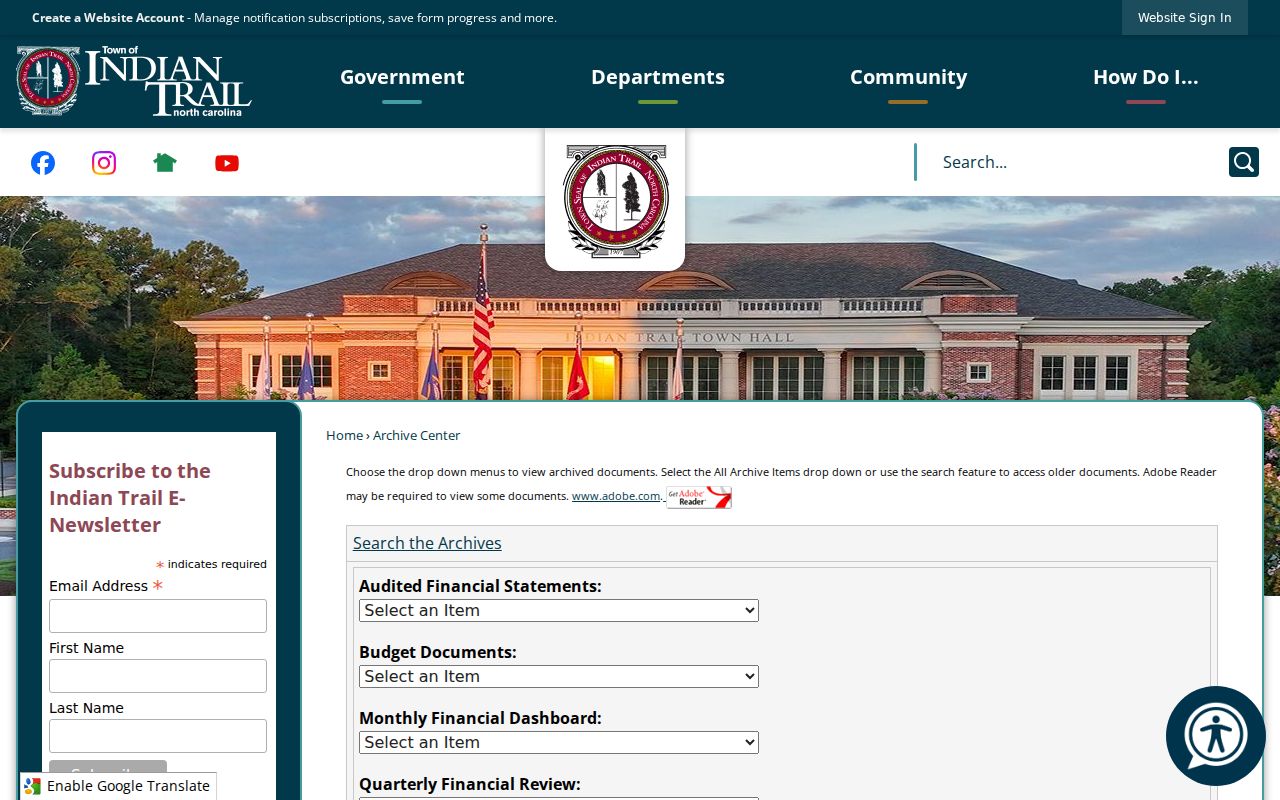
The Town Archive Center can search time period, category, keywords, and date ranges. Its categories include audited financial statements, budgets, financial reviews, dashboards, and town newsletters. Those records can establish a civic or project context, but the archive is not a historical resident database. A request for an existing town file may instead go through the Town Public Records Request route under the North Carolina Public Records Law (Chapter 132).
The town archive search is a records trail rather than a household volume, as its source page makes clear.
Indian Trail generally responds to existing-record requests within ten days. Ordinary electronic delivery is usually free, while extensive work can carry a charge after four hours. The town can redact confidential material and does not have to create a custom resident list.
An Indian Trail archive search works best when the requested document, date range, and project are named. Indian Trail records staff can provide existing responsive material, subject to the documented limits.
Indian Trail archive records can describe town activity without naming a household. Indian Trail requests should ask for an existing Indian Trail document rather than a compiled list.
Indian Trail archive categories, Indian Trail keywords, and Indian Trail date ranges are the fields that narrow a useful request.
Indian Trail Directory Geography
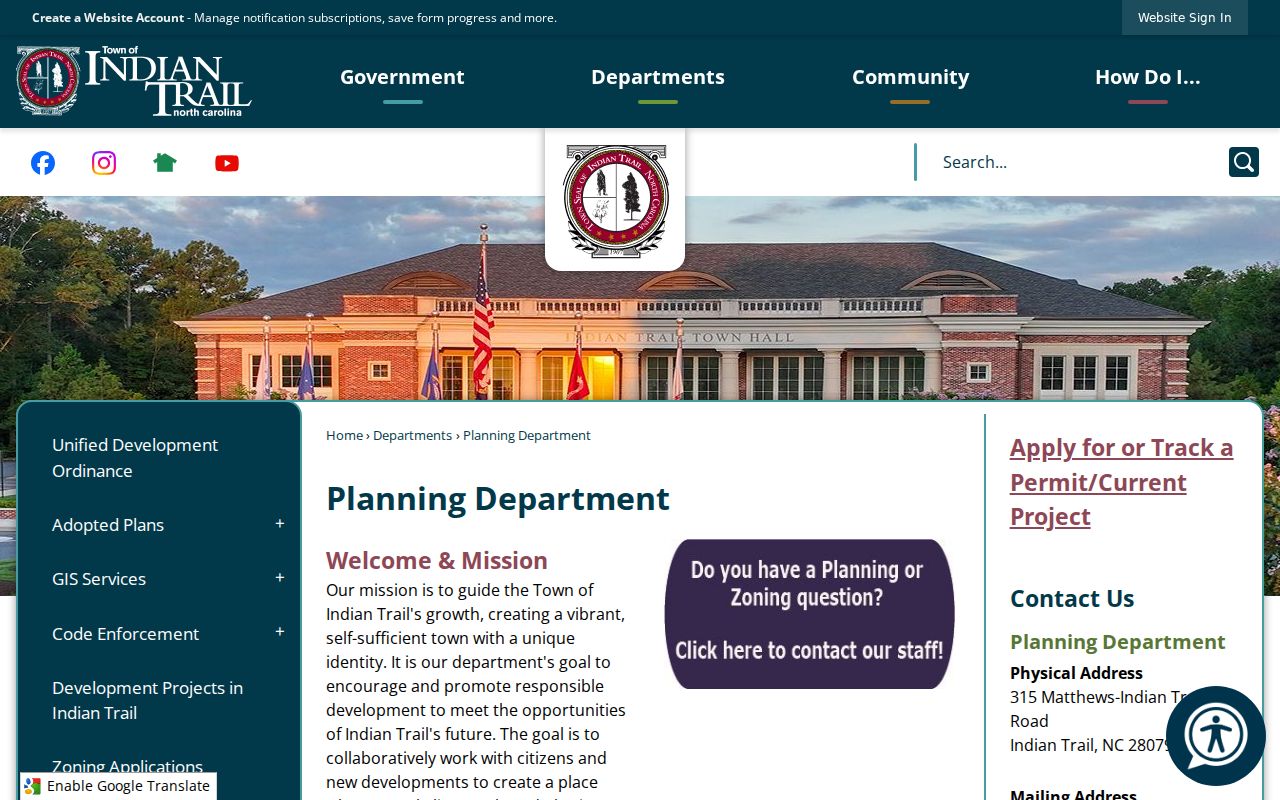
Older directory trails often need a geography check. The Town Planning Department handles zoning, code enforcement, planning-board, and development matters. Its work can help place a subdivision, road, site plan, or annexation record in context, but a planning case party is not automatically a person who lived at that address. For current map context, use the town's official boundary, roadway, zoning, and subdivision materials.
The planning department is a city-records source that helps place an old reference on the modern Indian Trail map.
Where a road, ZIP label, or postal city is uncertain, confirm the parcel and town boundary before treating it as Indian Trail. This avoids folding nearby Monroe, Matthews, Stallings, Waxhaw, Wesley Chapel, or Charlotte mailing labels into the town by assumption.
Indian Trail planning records can clarify a development or boundary question. They do not turn an Indian Trail project reference into a directory listing for a household.
Indian Trail map layers are current-reference tools. An Indian Trail historical claim still needs an Indian Trail source from the relevant period.
Indian Trail Historical Volumes and 1907
Indian Trail incorporated in 1907, in a setting shaped by proximity to the Seaboard Railroad. The town's adopted downtown plan says the CSX tracks still bisect downtown and connects the town name to a historic route between Petersburg, Virginia, and the Waxhaw Indians. That history explains why a family search can cross between town, rail, road, rural route, Monroe, and Union County records.
- 1907: Indian Trail incorporated in the railroad-era setting described by the town's adopted downtown plan.
- 1922-23: the earliest located digitized Monroe and Union volume provides a nearby historical reference point.
- 1962-63: the latest identified DigitalNC Monroe and Union volume ends the located digitized run.
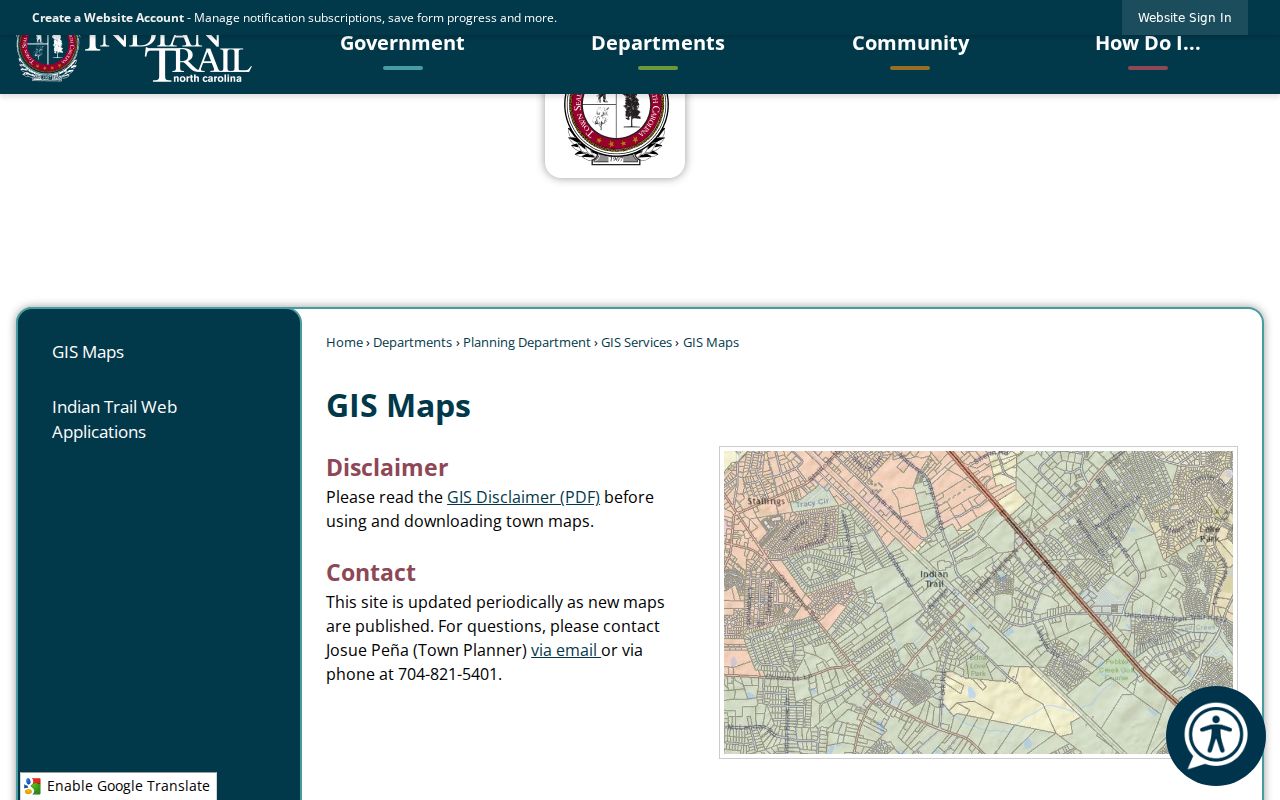
The Town GIS Maps supply current zoning, boundary, roadway, and subdivision references. They should be used to orient a historic volume clue, not to claim that an older wording maps exactly onto a present-day address.
The town's map portal provides current Indian Trail reference layers for this historical research.
A map is a starting point for geography. A recorded plat or deed is the stronger source when a legal boundary or historic parcel identity matters.
Indian Trail's 1907 incorporation is a useful date marker, not evidence for a specific Indian Trail household. The town history supplies context for a printed clue.
Indian Trail railroad context can explain an old route or nearby town reference. It does not prove that an Indian Trail family occupied a particular place.
Indian Trail Directory Gaps at the Archives
The North Carolina State Archives county-records guide and DOC catalog offer a fallback when a directory year is missing. Union County miscellaneous records run from 1844 through 1967, and the Archives can hold land, court, estate, tax, marriage, election, naturalization, Bible, and other county series. The Archives is in Raleigh at 109 E Jones Street, open Tuesday through Friday, 9 to 5, and Saturday, 9 to 1. Photo ID and advance notice for offsite records are required.
For copies, make the request specific: name, year, county, and record type. North Carolina residents may email archives@dncr.nc.gov; other requesters face the published search and handling process. The FamilySearch Union County deed catalog adds nine deed microfilm reels covering 1843-1883, although viewing access can vary by account or affiliate library.
Note: A Monroe May 1908 Sanborn map and broader NC LIVE Sanborn access can support building context, but no Indian Trail-specific Sanborn title was located.
Indian Trail researchers should log an Archives box, catalog result, or reel with the same care used for a historical page. Indian Trail source gaps are useful findings when they are documented clearly.
Indian Trail archive work can begin from a clear name and year. Indian Trail researchers should carry the same Indian Trail location wording into every request.
Tracing Indian Trail Directory Families
For family history, preserve the directory page as evidence rather than copying only a name. Record the volume year, printed page, exact text, address or route, spouse notation, employer or business clue, and every abbreviation expansion. Then compare that dated entry with a newspaper notice, obituary, deed, tax-card trail, plat, or archive file. A common name and an OCR error both make a single result weak evidence.
- Search the first available Monroe or Union volume by surname, then examine nearby names and any street or rural-route wording.
- Write down the directory year, page, exact printed text, and the abbreviation key used in that volume.
- Check a dated newspaper, obituary, deed, tax record, or plat for a second source that fits the same person or place.
- Repeat with the next available directory year, treating a gap as a gap rather than proof that the household left.
- Use generic census corroboration only where it fits the date and record, without treating a directory entry as occupancy proof.
Someone can disappear because the volume omitted the name, the person moved, the entry was tied to a business, or the publisher changed its coverage. The best conclusion is usually a dated, limited one: what the directory printed, where it printed it, and what another source supports.
Indian Trail family history often crosses county and town labels. Indian Trail researchers can avoid a false match by keeping the original road, route, and year beside the name.
Indian Trail history is easier to test when each Indian Trail record has a source date. A second Indian Trail or Union County record can then confirm or challenge the first.
Indian Trail Directory Research in 2026
On May 5, 2026, Union County library news highlighted the Dickerson Room's reference materials, newspapers, databases, and historical photographs alongside the “Union County Through Generations” program. That update reinforces the library as the right local starting point when a historical volume needs deeper work. It also supports asking for help with a precise road, surname variant, obituary date, or photograph identification.
Use a source date and keep the original collection link with each result. That small habit separates what a record says from later inference, and it makes an Indian Trail historical search repeatable for another family member.
Indian Trail history benefits from a clear research log. An Indian Trail result remains easier to verify when its source and date travel with it.
Indian Trail collections reward careful notes. Indian Trail families can revisit an Indian Trail lead when the exact page and volume are recorded.