
Indian Trail Records for a Name
Use official Indian Trail records to answer a record question, rather than to presume a current residence. The Union County Property Tax Inquiry connects an owner name or address to an Indian Trail parcel card. The state voter tool reports Indian Trail registration information. NC eCourts indexes public case activity. Vital offices handle eligible certificate requests. A business or practitioner listing may confirm a public credential, but it is not evidence of an Indian Trail household address. Comparing record purpose first helps avoid treating a similarly named person as the right person.
| Record | What It Confirms | Where | Access |
|---|---|---|---|
| Indian Trail parcel card | Indian Trail recorded property interest and parcel details | Union County Property Tax Inquiry | Public portal; not certification |
| Indian Trail voter registration | Indian Trail registration status and often precinct or district | NC Voter Lookup | Public individual lookup |
| Indian Trail court case | Indian Trail public case parties, events, and disposition | NC eCourts Portal | Anonymous public access |
| Indian Trail vital certificate | Indian Trail facts on an eligible certificate request | Union County Register of Deeds | Eligibility-controlled order |
| Indian Trail practitioner record | Indian Trail public credential or provider information | NCTracks | Public provider search |
When the only starting point is an Indian Trail name, the voter and court channels offer different ways to narrow it. When an Indian Trail address is already known, the parcel card can supply a parcel number and recorded owner. Neither route establishes occupancy. Preserve the Indian Trail source, search date, and exact result wording before moving to another index.
Indian Trail Voter Lookup Fields
The NC Voter Lookup is the individual registration route for Union County. It requires a first name and last name. Middle initial, birth year, and county are optional limiters. The search also requires a status choice: Registered, Removed, or Denied. A result can show registration status and often county, precinct, district, polling place, sample-ballot, or absentee information when available. It is a registration record, not a general proof that a person presently occupies a particular home.
| Field | Use in the official lookup |
|---|---|
| First name and last name | Required starting fields for an Indian Trail name |
| Middle initial and birth year | Indian Trail options to separate similar names |
| County | Indian Trail narrowing to Union County |
| Voter status | Indian Trail status must include Registered, Removed, or Denied |
The Union County Board of Elections is at 316-B East Windsor Street in Monroe and can be reached at 704-283-3809. Written selective-list requests are governed by G.S. 163-82.10. The statute allows defined public list categories, while excluding date of birth, Social Security numbers, driver-license data, and copied or traced signatures.
Note: State voter files update weekly, so a dated search note is more useful than assuming a file is permanent.
Indian Trail Court Name Checks
NC eCourts Smart Search allows anonymous public searching by case number or party. Its advanced filters include location, party name, date of birth, gender, ethnicity, FBI number, SO number, case type, case status, and file-date range. Party-name modes include exact name, nickname, sounds-like, and business name. For a common name, use Union County or another known location and a date range before treating any record as relevant.
Wildcards have minimum lengths. Case numbers, business names, and nicknames need at least four characters before an asterisk; a last name needs three; a first name needs one. That detail can prevent a broad result set from obscuring the record being sought. Sealed, confidential, sensitive, and victim data are withheld, so an empty public result does not confirm that no restricted record exists.
The eCourts training material illustrates the public Smart Search interface and its filters.
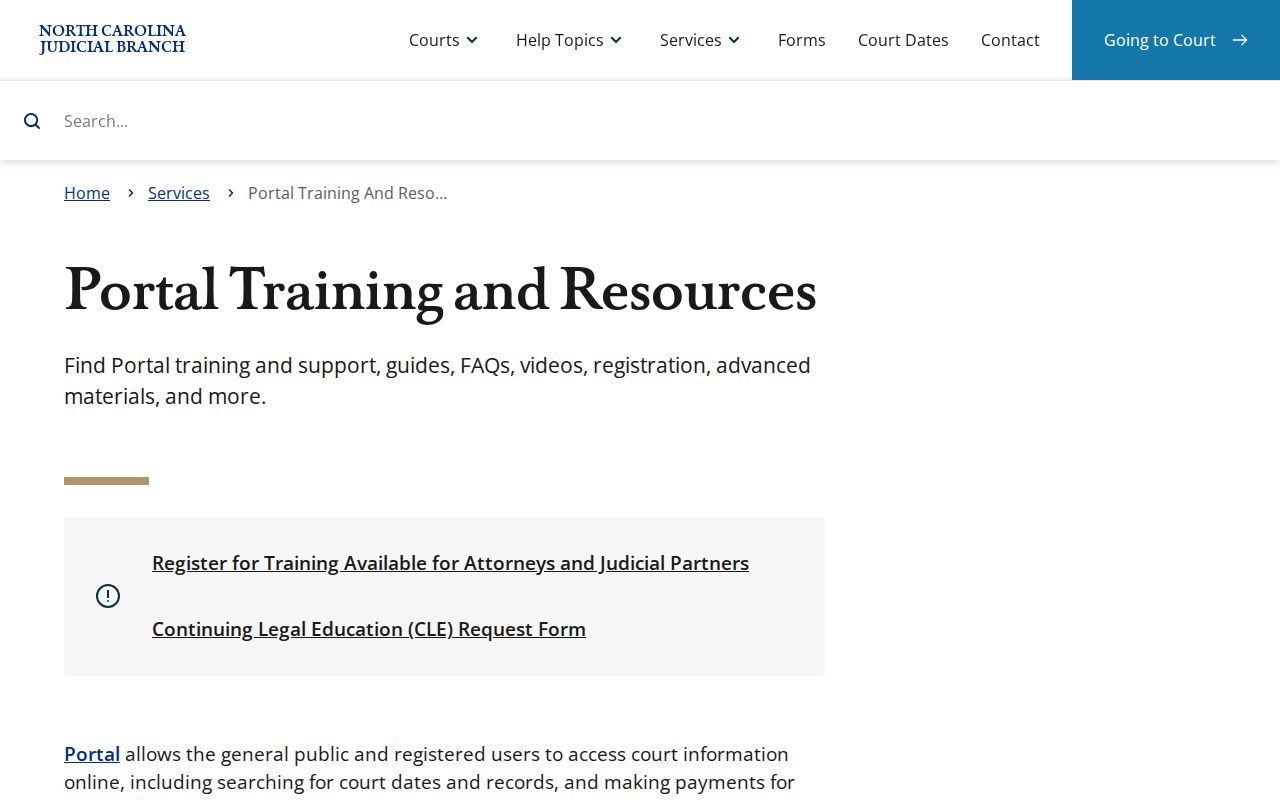
Use the screen as a reminder to narrow a party search by official filters, then read the resulting case summary in its full public context.
Indian Trail Court Result Fields
A public Smart Search result can lead to the Case Summary or Register of Actions. Depending on the case, visible material can include case information, assignment, parties, causes of action, events, dispositions, hearings, and public financial information. Judgment Search has a different role: it accepts a party or case number and can be filtered by type, status, location, and date. Its results include the case number, disposition status, index date and time, parties, and judgment comments. Court participation does not establish an address or identity by itself.
- Indian Trail case number and case status
- Indian Trail named public parties and assignment
- Indian Trail events, hearings, and dispositions
- Indian Trail public financial information when available
- Indian Trail judgment index date, time, and comments
A certificate is different from a screen result. The clerk's certified criminal search uses form AOC-CR-314, costs $25, covers one county, and can be requested by mail or in person. Free courthouse public terminals provide non-certified self-service searching across North Carolina counties. Choose the channel that matches the needed record, rather than assuming an online case screen is certified.
The official criminal-search procedure shows the separate certified route.
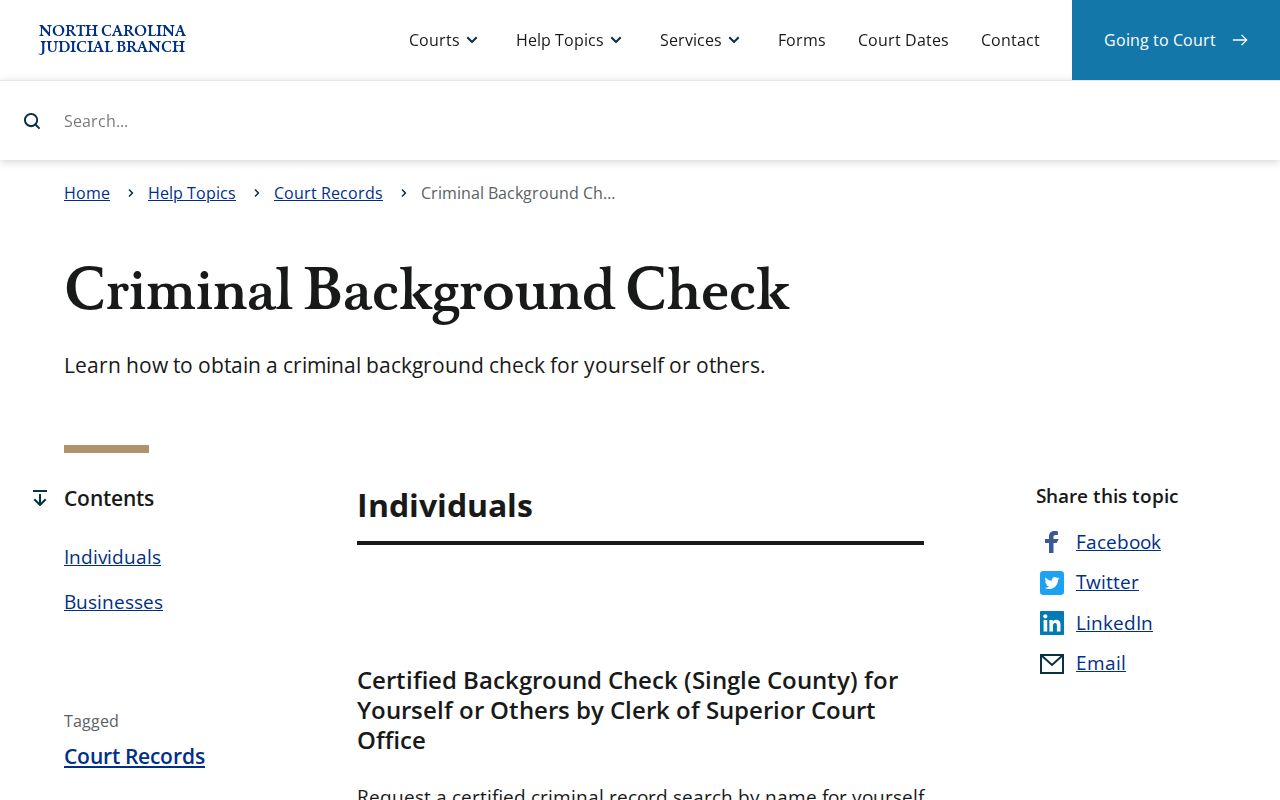
The procedure supports a county-specific request, while a courthouse terminal remains the free non-certified fallback.
Verify an Indian Trail Resident Match
Verification means checking whether separate official records share enough non-sensitive facts to concern the same person. Start with the least sensitive source that fits the question. A name plus Union County can narrow the voter search. A known street address can be checked in the parcel system, but the recorded owner and the person living there may differ. Court and vital routes have their own limits. Do not fill gaps by guessing from a name, a postal label, or a single record.
- Record the Indian Trail spelling, middle initial, known county, and date of the initial official result.
- Use the Indian Trail voter search or parcel card only for its stated field, such as registration status or recorded property interest.
- Run a narrowed Indian Trail eCourts party search and compare public case details without treating a party label as a residence statement.
- If an Indian Trail eligible certificate is needed, request it from the custodian instead of treating an index or order screen as the certificate.
- Indian Trail docket
- An Indian Trail docket is the court's running list of events and filings in one case.
- Indian Trail index and image
- An Indian Trail index points to a record; an image is the document view, if public access permits it.
- Indian Trail certified copy
- An Indian Trail certified copy is issued by the custodian with official certification, not merely printed from a search result.
For an Indian Trail address-wide record trail, use the Indian Trail By Street directory rather than stretching a one-person record search into a block search.
Indian Trail Record Inventory
Keep each Indian Trail result labeled by its actual field and custodian. The inventory below names common Indian Trail result elements without turning any one field into proof of current residence.
| Indian Trail result field | Indian Trail meaning |
|---|---|
| Indian Trail parcel ID | Indian Trail parcel reference |
| Indian Trail property owner | Indian Trail recorded property interest |
| Indian Trail mailing address | Indian Trail parcel-card contact field |
| Indian Trail voter status | Indian Trail registration status |
| Indian Trail precinct | Indian Trail election geography |
| Indian Trail case number | Indian Trail court-file identifier |
| Indian Trail disposition | Indian Trail public case outcome field |
| Indian Trail hearing | Indian Trail public court event |
| Indian Trail certificate request | Indian Trail eligible custodian order |
| Indian Trail practitioner record | Indian Trail public credential context |
Indian Trail Vital Record Orders
Birth, death, and marriage records are not an open name database. The Union County ordering portal has separate Birth, Marriage, and Death request paths. County birth and death records reach back to 1913, and marriage licenses to 1842. Certified-copy access is limited by relationship, legal authority, and identity requirements. State records also have separate statutory date windows. The correct action is to order an eligible record, not to use a vital request as a resident search.
For a state research route, North Carolina reports birth coverage from 1913, death coverage from 1930 with some earlier delayed deaths, marriage coverage from 1962, and divorce coverage from 1958. Earlier materials may require the county Register of Deeds, Clerk, family records, or the State Archives. G.S. 130A-93 sets vital-data access restrictions. These boundaries protect sensitive facts and avoid an unsupported identity conclusion.
The county order portal displays the available record-type paths for Union County.
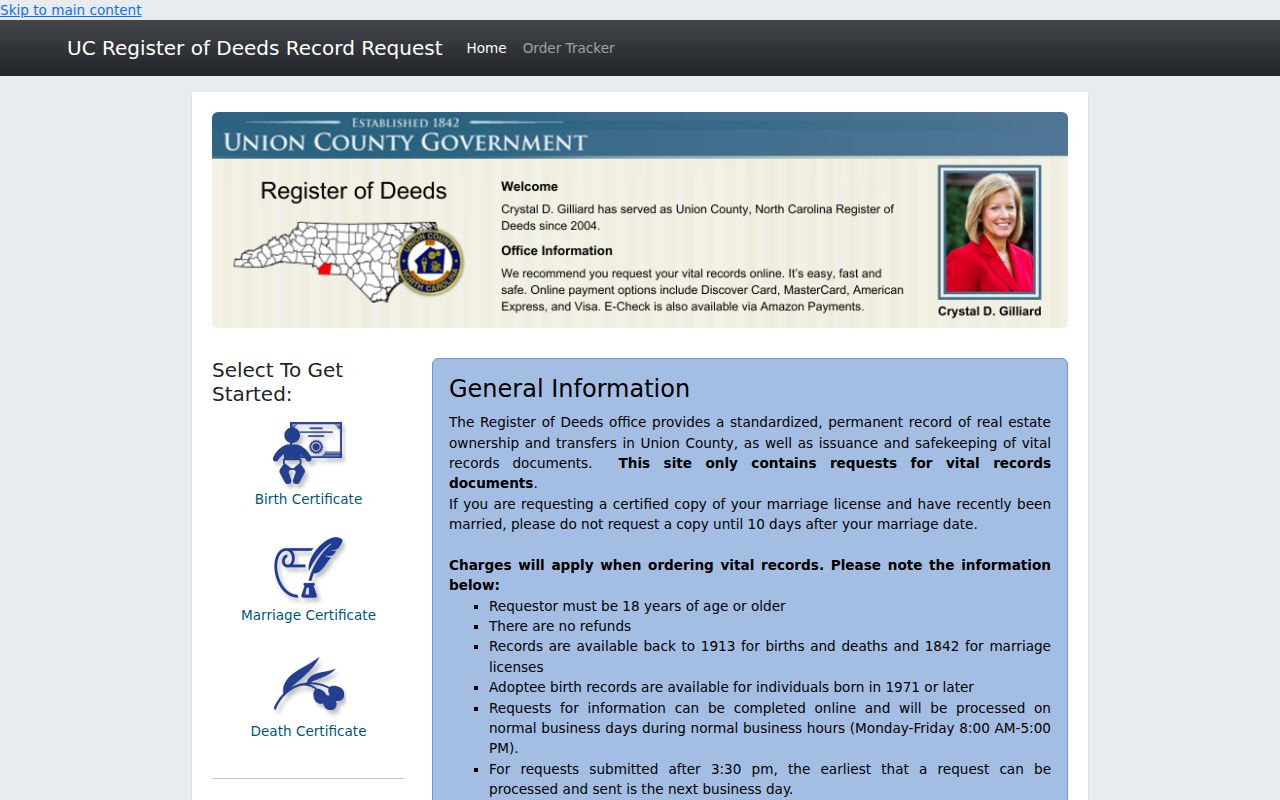
That ordering choice is an access channel for eligible requests, not a public lookup result.
Indian Trail Professional Record Limits
A professional or organization record can be useful when the question is limited to a public credential or filing. It should never be recast as a household record. NCTracks Practitioner Search accepts NPI, license number, last name, and first name, with sort controls. Its result relates to a provider record. It does not establish that the provider lives in Indian Trail, even when an address or practice appears in another public source.
The public practitioner screen demonstrates the distinction between a credential search and an Indian Trail person-record search.
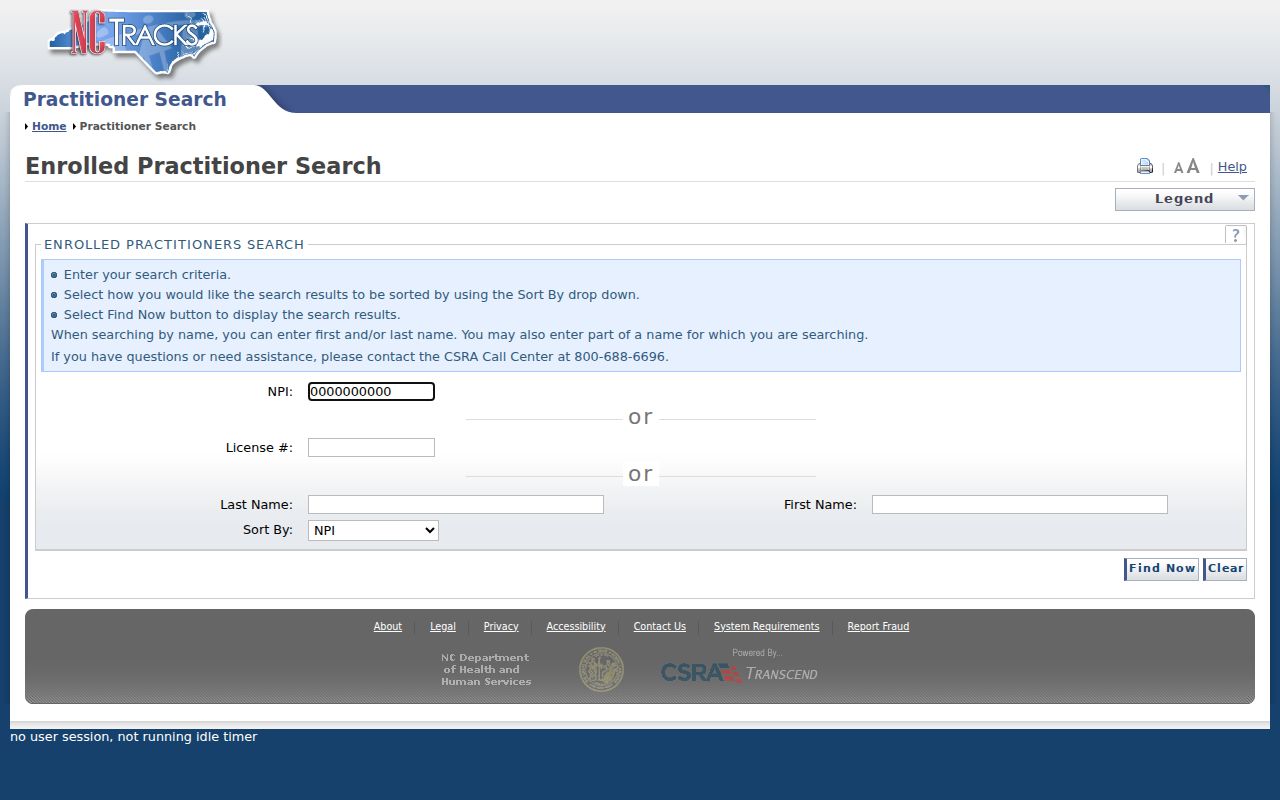
Keep the result labeled as a practitioner record, and use an appropriate property, voter, court, or vital channel only for its own stated purpose.
Indian Trail Resident Lookup Privacy
North Carolina Public Records Law, Chapter 132, makes many public-agency records available while preserving specific confidentiality rules. G.S. 132-1.10 provides a no-fee signed written process to request redaction of Social Security numbers and other qualifying personal information from a public register or clerk website. The request identifies the record and location. It is a custodian process, not a reason to duplicate personal data elsewhere.
The North Carolina Address Confidentiality Program supplies an address substitute for eligible survivors. Public searches can therefore be incomplete by design. Confidential voter fields, sealed court material, sensitive victim information, and protected addresses should remain protected. An existing-record request may be possible under Chapter 132, but an agency does not have to create a new compilation that it does not keep.
Note: A missing result can reflect a privacy rule, an index limit, a spelling difference, or a record kept by another custodian.